
Why Generic Website Builders Fail Sports Clubs (And How to Stop Admin Burnout)

Your club's website should make your life easier. It should answer parent and player questions, even late at night. It should update this weekend's schedule automatically. And when someone asks their phone to find a youth soccer league nearby, your site should appear.
Most club websites don't do any of that.
But most websites sit there like old digital brochures. They look okay on a computer but don't work well on phones. They still show last season's standings because no one updated them. And every parent or player in question ends up on your phone through texts, emails, or group chats.
You didn't volunteer to manage a website. You wanted to run a sports club.
The truth is, picking up the wrong website builder means more admin work, not less. The right one takes those tasks off your plate. Let's look at seven platforms' clubs and leagues to use, what they do well, where they struggle, and why sports-specific builders are becoming the top choice for volunteer-run groups.
The Four Nightmares Every Club Admin Faces
Before we compare platforms, let's talk about the real challenges you face.
Outdated website designs: Parents/Players expect the same effortless experience they get from Uber or their banking app. When they land on a clunky, non-mobile-responsive site, they don't think "budget constraints." They think "amateur operation." First impressions count. A lot.
Double data entry: You update the game schedule in your management software. Then you log into your website and update it again. Then you update the mobile app. Then you send the email. One schedule changes. Four different systems. This creates bottlenecks and roster-sync headaches, and it burns through your volunteer hours fast.
Invisible to local search and AI: When a parent/player asks Siri or ChatGPT for "youth basketball near me," does your club show up? If your website lacks proper local SEO structure, fast load times, and semantic markup, the answer is no. You're effectively invisible to the exact families trying to find you.
Staff time drains: The same questions come up over and over. "What time is practice?" "Where's the field?" "Did my payment go through?" Your coaches and admins are getting pinged day and night with basic questions that a decent website should handle automatically. That's admin and volunteer burnout, and it's preventable.
We'll use these four problems to judge each platform below.
1. Wix
Wix is known for giving you total design freedom. You can move anywhere. That's great for creative agencies or photographers. But for a volunteer parent building a club website late at night, it can be overwhelming.
What it does well
Wix offers absolute positioning, more than 2,000 templates, and now includes AI site generation with "Wix Harmony." You enter a prompt, and it creates a full website. Mobile performance is good, with about 71% passing Google's Core Web Vitals. There are also add-ons for restaurants, hotels, and events.
Where it falls short for sports clubs
Wix isn't built for sports clubs. It doesn't have built-in registration, live standings updates, or team roster integration. You have to use third-party widgets or update pages by hand whenever your schedule changes. The double data entry problem is even worse with Wix.
Pricing
Plans start at about $199 per month (billed yearly) for basic sites and go up to $1,599 or more for advanced features. E-commerce transactions have a 2.9% plus $0.30 fee. For clubs handling registrations, these fees add up quickly.
2. Squarespace
Squarespace is for those who value design. Everything is grid-based, organized, and looks polished. Your site will definitely look professional.
What it does well
Templates are attractive and work well on mobile devices. All plans offer unlimited storage and bandwidth. Commerce features are strong, with tools like abandoned cart recovery, customer accounts, and point-of-sale integration with Square. About 68% of sites pass Core Web Vitals, which is solid.
Where it falls short for sports clubs
Squarespace is made for portfolios and online stores, not for running leagues. It doesn't have built-in sports registration, automatic schedules, or team communication tools. You pay for great design but have to piece together sports features yourself. Pricing is only in USD, which can be a hassle for international clubs, and the 3% transaction fee on lower plans can hurt growing organizations.
Pricing
Personal plans start at $16 per month. Business plans are $23 to $26 per month. Commerce plans range from $27 to $49 per month. The 3% fee on the Business Plan means clubs with more than a few hundred dollars in registrations each month pay more in fees than the plan costs.
3. GoDaddy 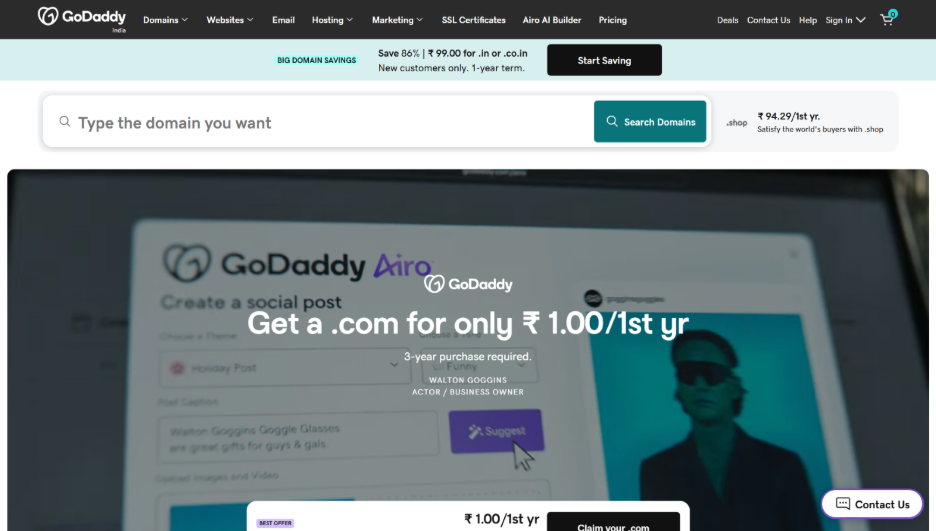
GoDaddy is known for getting you online quickly with few decisions to make. This works well for solo business owners or local tradespeople.
What it does well
The section-based editor is very user-friendly. GoDaddy Airo, their AI assistant, can create site layouts, text, and social media content from one prompt. The marketing suite covers email, social posts, and review tracking. Video hosting with Vimeo is included. Plans start at a low price.
Where it falls short for sports clubs
GoDaddy isn't designed for sports clubs. There are no registration forms for waivers or uniform sizes, no team pages that update automatically, and no facility booking calendars. You get a basic site that looks fine but doesn't help with club operations. Also, the low starting price goes up a lot when you
renew.
Pricing
Basic builder plans start at about $9.99 per month. Premium plans are $14.99, and commerce plans are $20.99 per month. Payment processing fees are 2.7% to 2.9% plus $0.30 per transaction.
4. SITE123 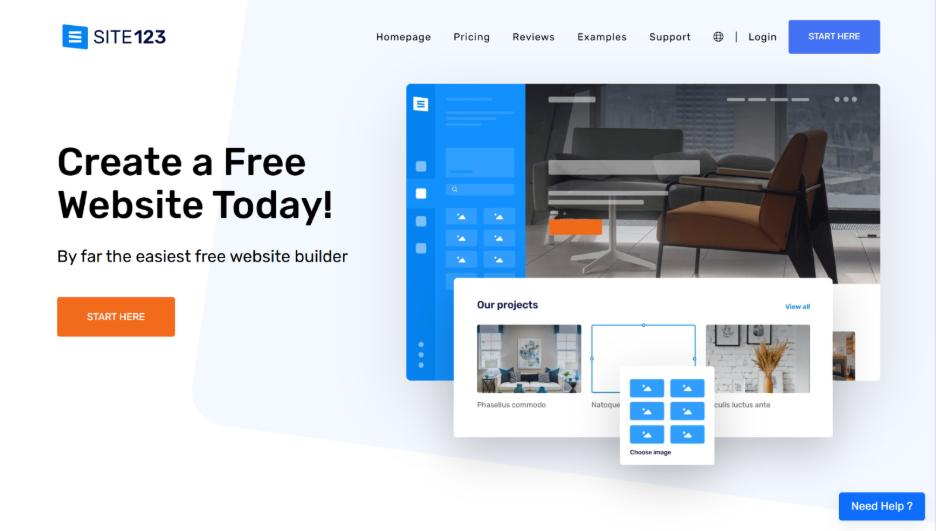
SITE123 is all about simplicity. If you've never built a website and need one up in an hour, this is a good choice.
What it does well
The setup wizard is very quick. Choose a category, add some text, and publish it. The interface is simple and helps you avoid decision overloading. There's a free plan for testing, and Premium plans let you use custom domains and add basic custom code.
Where it falls short for sports clubs
SITE123 is too limited for organizations that want to grow. You can't use outside templates or change the layout grid. The system is closed. For sports clubs that need registration, scheduling, and team management, it's basically just a static flyer.
Pricing
There's a free plan with subdomains. The premium costs about $7.80 per month. But as soon as you need more features, you'll outgrow it.
5. HostGator 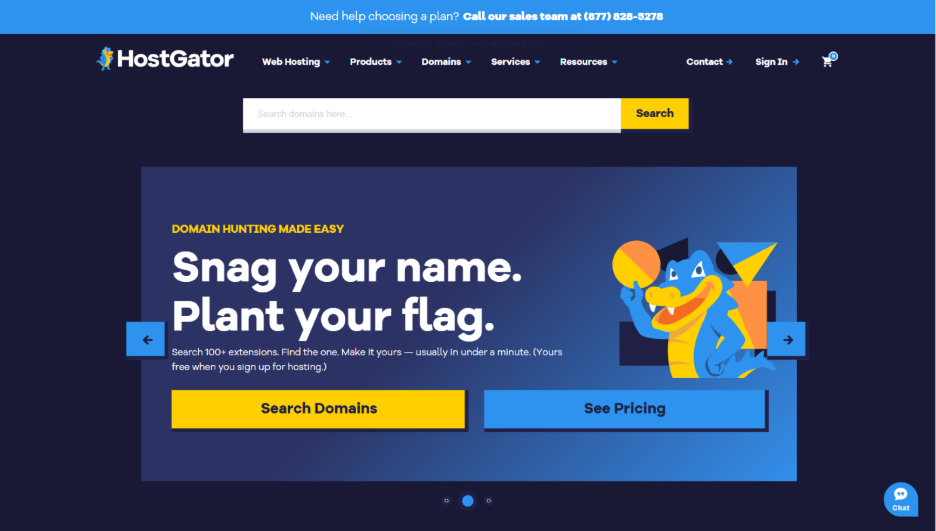
HostGator is an established hosting provider now moving into AI website builders. They are combining products and encouraging users to try managed WordPress or a new AI builder powered by Bluehost.
What it does well
Shared hosting plans come with unlimited bandwidth and lots of storage. The new AI builder lets you use drag-and-drop grids and access over a million royalty-free images. Their "AI All Access" pack, at $20 per month, combines ChatGPT, Claude, Gemini, and Grok in one dashboard to help create content.
Where it falls short for sports clubs
HostGator provides hosting, not sports solutions. There is no built-in registration, roster management, or schedule syncing. They often try to sell extra security and backup tools, which can be frustrating if you expect everything included. You get server space and a basic builder, but you have to handle the sports features yourself.
Pricing
Introductory rates start as low as $2.75 per month, but renewals jump significantly. The Hatchling plan renews at $11.95 monthly. Factor in the AI add-on and essential security tools, and the real cost climbs quickly.
6. WordPress 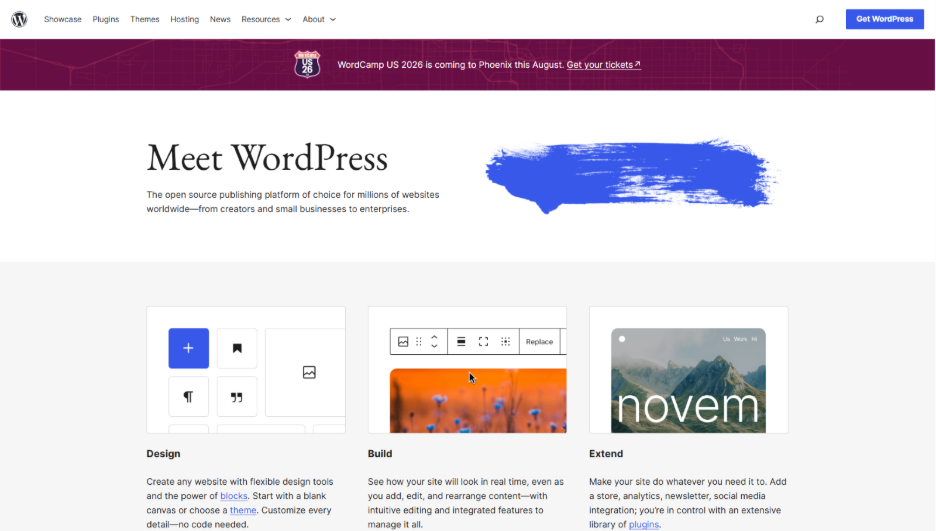
WordPress runs over 42% of all websites. It's a fully open-source platform, giving you total freedom and control. But it can also bring a lot of headaches.
What it does well
WordPress is extremely flexible. There are over 60,000 plugins, custom database options, and support for any payment gateway. Sports-specific plugins like SportsPress are available. If you have a developer, you can build almost anything.
Where it falls short for sports clubs
Most clubs don't have a developer on staff. As a volunteer, you'll be responsible for security, updates, plugin conflicts, and keeping the site running well. Sites built with Elementor only pass Core Web Vitals on mobile 27% of the time unless you spend a lot of time optimizing. The real cost includes managed hosting ($20–$60/month), premium themes, security plugins, and sometimes hiring a contractor when things break. For volunteer-run clubs, that's a lot of extra work.
Pricing
The core software is free. But in practice, costs start at $9 per month for basic hosting and can rise quickly with premium plugins, themes, and developer help.
7. SportsPlus Website Builder
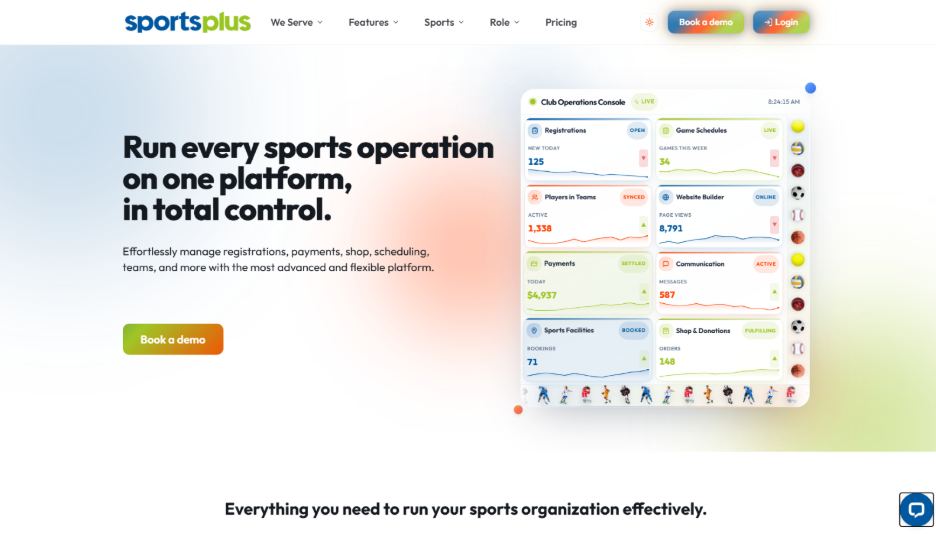
SportsPlus isn't just a website builder with sports templates. It's a specialized platform where your website connects directly to your club's operational database.
What it does well
Live data sync means you don't have to enter information twice. Update a game result, and the standings update on their own. Publish a schedule, and it shows up on the website right away. When a parent registers a player, the roster updates across the site and app automatically. The builder creates pages for registrations, programs, tournaments, calendars, standings, teams, facilities, staff, policies, and more. You can customize colors, fonts, headers, and footers. All the data is handled for you.
AI that actually answers questions. SportsPlus includes an AI chatbot trained specifically on your organization's live data. Parents/Parents asking about practice times, field locations, or payment status get accurate answers 24/7. That staff time drain we talked about? It disappears.
Designed for parents and players who use their phones first. Every template works on a mobile right away. The platform meets Core Web
Vitals standards without needing a performance expert. Parents and players can register, pay, check schedules, and RSVP from their phones.
No surprise transaction fees. Unlike horizontal platforms that skim 2.9% to 3% off every registration, SportsPlus offers nonprofit payment processing rates with no additional platform fees. For clubs collecting thousands in seasonal dues, that's real money saved.
Pricing
Bronze starts at $33 per month for up to 100 members and 50 teams. Silver runs $58 per month for 350 members and 100 teams. Gold is $98 per month for 1,000 members. All plans include the full website builder, custom domain, free SSL, mobile app access, and live data sync. No technical skills are required.
Let's Compare Head-to-Head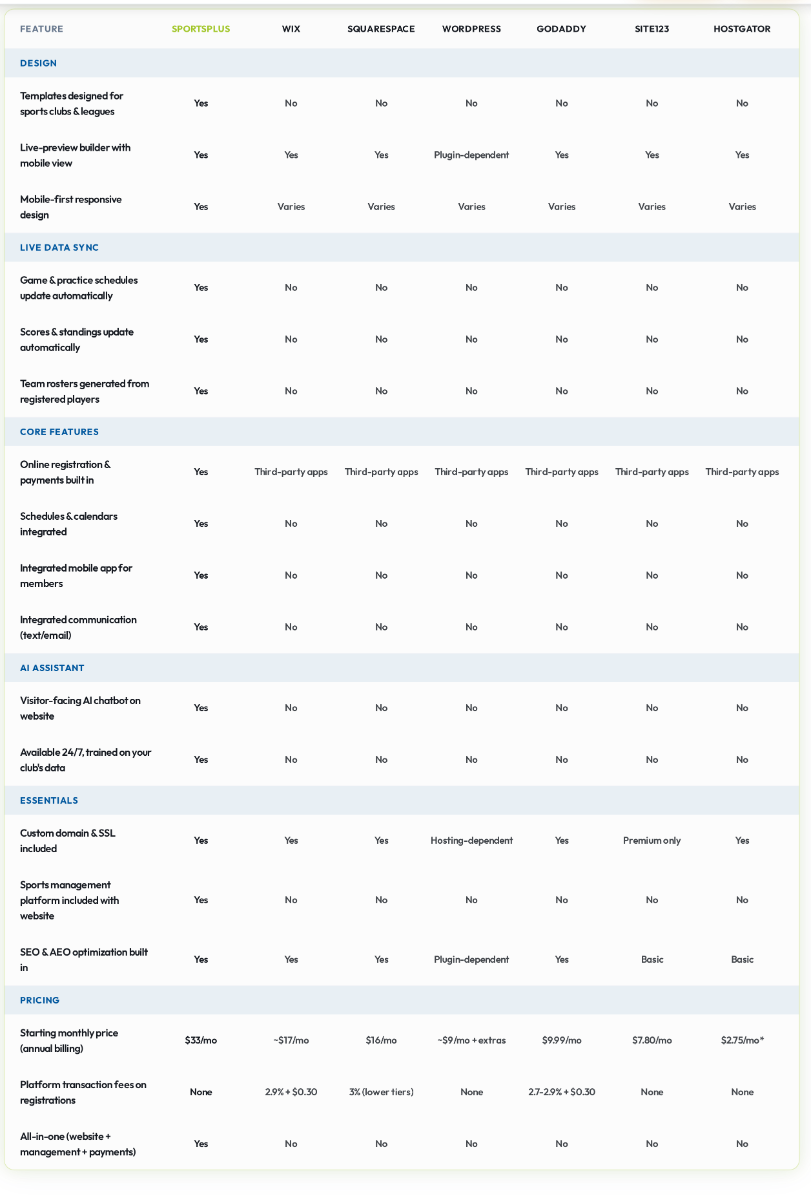
The Real Cost of Choosing Wrong
Many club directors overlook this: the price tag on a website builder isn't the real cost. The real cost is the hours volunteers spend updating schedules in several places, the lost registration money when parents leave a slow mobile site, and the families who never find you because your site doesn't show up in local searches.
Platforms like Wix or Squarespace may seem cheaper at first. But when you add the cost of third-party scheduling apps, separate registration tools, email marketing, and the time spent keeping everything updated, you end up paying more than you would for an all-in-one sports platform.
WordPress is very flexible if you have technical help, but most clubs don't. HostGator and GoDaddy provide hosting and a basic builder, but no sports features. SITE123 is too limited to grow with your club.
SportsPlus changes the approach. The website isn't a separate project you have to manage in your spare time. It's built from the management work you're already doing. When you update the backend, the website updates too. That's what makes it a true operations hub, not just a digital brochure.
Choosing the Right Platform for Your Organization
If you're a small business or personal brand, Wix or Squarespace could work well. If you need a quick portfolio and don't need sports features, SITE123 or GoDaddy can get you online fast. If you have an IT volunteer and need custom options, WordPress is still a choice.
But if you're a sports club, league, tournament operator, or recreation department, the math changes. Your website isn't just marketing. It's registration. It's scheduling. It's communication. It's fundraising. It's the first impression for new families and the daily tool for existing ones.
You need a platform that understands roster sync, registration bottlenecks, and volunteer burnout. You need live data, mobile-first design, local search visibility, and an AI assistant that handles parent questions while you sleep.
That's not a generic website builder. That's a sports-specific operations platform with a website attached.

Nathan Uppara
Digital Marketing Lead at SportsPlus
Nathan Uppara is the Digital Marketing Lead at SportsPlus, where he helps sports organizations discover better ways to manage registration, payments, scheduling, communication, websites, and mobile apps. He combines his experience in digital marketing and sports technology to create practical content and resources for clubs, leagues, and sports organizations.
Latest in Sports Admins

What Features Should a Youth Sports Club Website Have in 2026?
Oct 9, 202642
What Should a Modern Sports Organization Website Actually Do?
Oct 2, 202662
Why Generic Website Builders Dont Work for Sports Organizations
Sep 18, 202666
Smarter Sports Management with AI-Powered Features in SportsPlus
Jan 7, 2026184
Game Over on Booking Chaos-Sports Facility Software That Scores
Nov 19, 2025249
Popular in Sports Admins

Top 6 Golf Online Stores
Dec 14, 202310923
Top 5 Tennis Online Stores
Dec 14, 20239062
How American sports programs compare to European sports programs.
Jan 16, 20245852
The All-in-One Playbook for Stress-Free Sports Fundraising
Dec 13, 20232184
Top 10 Sports Website Builders Compared (Why Most Will Cost You Registrations)
Jun 18, 20241566