
Player Stats-Importance,Popularity,Usage

Stats matter because they put what happens on the field, court or ice into information that people can actually utilize. A batting average instructs a hitting instructor where to spend his practice time. Soccer coaches don’t only want to see wins, they want to see strong decision-making under duress, and that’s reflected in the pass completion %. Stats have gone from being a nice-to-have to being a typical aspect of running a team for youth and amateur sports organizations. They help with player development, talent evaluation, in-game tactics and more and more with injury prevention.
This guide is for club managers, coaches and parents who want to understand why metrics have become so fundamental to organized sports, which figures genuinely matter in each discipline and how clubs gather and use this data without turning it into a source of pressure for young athletes.
Key takeaways
-
Player stats provide coaches with an objective foundation for development talks, not simply a scoreboard to react to.
-
Every sport has its own fundamental lexicon of stats. Basketball, soccer, baseball, football, hockey, they all evaluate performance differently. Mixing categories ( such hitting and pitching metrics, or offense and defense ) just creates confusion.
-
Stats are more evident now, since tracking technologies, applications and club administration platforms have made data collection realistic for volunteer coaches and small clubs, not just professional and college programs.
-
Stats help growth and effort when used effectively. If used badly (comparing publicly, ignoring playing time or level of competition) they might generate harmful pressure on young athletes.
-
Teams and organizations that run many sports often do better with one connected system for data, rosters and scheduling than a different spreadsheet or app for each team.
What Are Player Stats?
Player stats are ways of measuring a player's stardom in a game or practice: how many points he scored, how many passes he completed, how many innings he pitched. There are generally three varieties.
Raw counting metrics are just counts of events. Goals, assists, tackles, hits. They're easy to count but might be deceiving on their own, since a player who receives more minutes will simply rack up more of them.
Rate or % data normalize for opportunity. Shooting percentage, pass completion percentage, on-base percentage. They are often better for comparing players who don’t play the same amount of minutes or get the same amount of chances.
Advanced/derived numbers are single-number stats that combine numerous data points, as plus/minus in hockey and basketball, or WAR in baseball. These are popular at the professional and college level, yet are significantly less common (and often unnecessary) in youth and recreational sports.
Why Are Player Stats Important?
Player development
“Stats give coaches a way to talk about improvement, something tangible, as opposed to one game impressions. If a player’s free throw % has gone down over the course of a season, that’s a concrete, fixable thing to concentrate on in practice, as opposed to a general feeling that “shooting’s been off.” The same principle applies across sports: an increasing completion % in soccer or a dropping ERA in baseball means something to a coach that a final score alone never can.
Talent scouting and recruiting
Coaches, scouts and recruiters utilize stats to evaluate players they haven't seen much of in person. This is more important at the older youth and high school level because families are creating a recruiting profile for college programs.” A highlight reel is nice, but the thing that matters more is a reliable, constant record of stats, related to real games and seasons.
In-game and season strategy
Decisions are based on real-time and historical stats: What lineup to run, what tendencies to prepare for with the opponent, when to make a substitution. A coach may modify his defensive coverage when he sees that a key player on the other team is shooting considerably below his season average in three-point shooting.
Injury prevention and workload management
Coaches and athletic trainers can track playing time, minutes and sometimes physical load (distance covered, sprint counts from wearables) to detect tendencies that lead to injury — say a player recording much more minutes than usual in a short span. This use case is more popular at higher levels of competition when wearables and GPS monitoring are more prevalent, but the basic idea (watch workload, not just performance) works at any level.
Engagement and motivation
For many young athletes, seeing their own numbers improve over a season is motivating in a way that team results alone aren't. A player who didn't get much playing time can still see progress in shooting percentage or completion rate during the minutes they did play.
Why Have Player Stats Become So Popular?
A few forces have converged to make stat tracking far more common outside of professional and college sports:
Tracking has gotten easier. Mobile apps and club management platforms mean a coach or team parent can log a box score from a phone during or right after a game, instead of needing a dedicated scorekeeper and a paper book.
Recruiting has raised the stakes. As more families pursue college athletics, especially in sports with clear individual stat lines like baseball, basketball, and track, there's more pressure to keep an accurate, presentable record from an early age.
Parents expect visibility. Where stat tracking used to live in a coach's notebook, it's now common for parents to expect some access to how their child is performing over a season, not just game outcomes.
Kids like watching their own numbers. Gamification isn't just a marketing term here. Plenty of young athletes are genuinely motivated by watching a personal number tick upward, independent of whether the team wins.
None of this means every rec-league team needs professional-grade analytics. It does mean that basic stat tracking, done consistently, is now a realistic expectation rather than something only elite programs can manage.
What Stats Matter Most, by Sport?
Different sports emphasize different stats, and mixing categories that shouldn’t be compared (hitting stats with pitching stats, for example) is one of the most prevalent errors in stat glossaries. Here’s a cleaner breakdown.
Basketball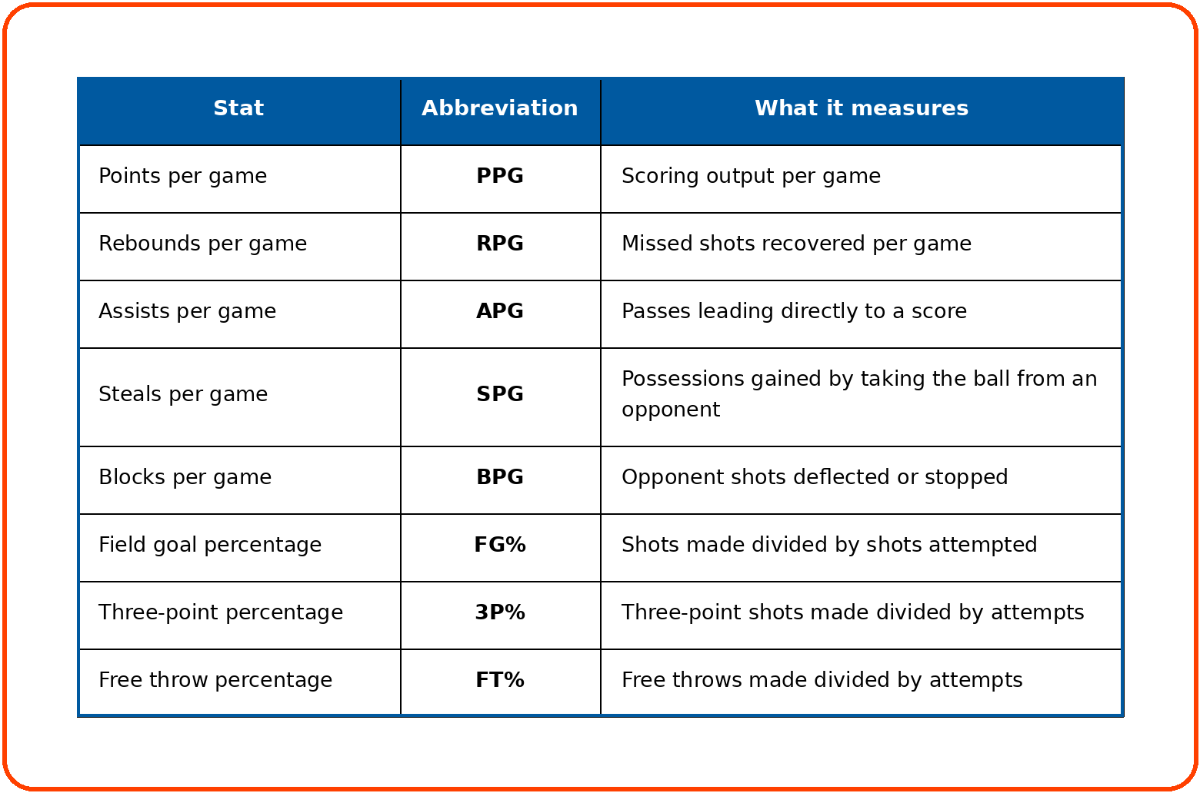
Soccer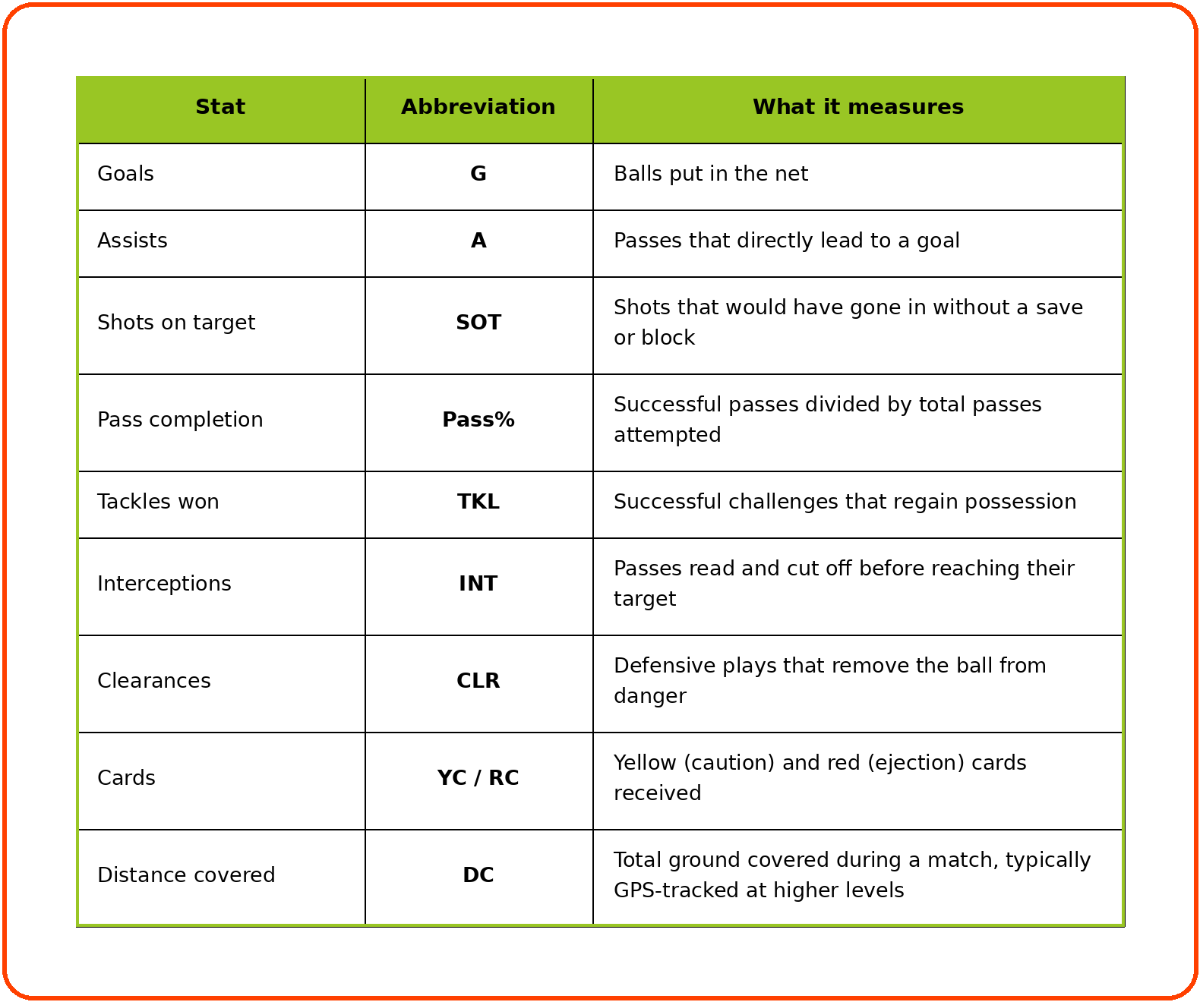
Baseball and Softball
Hitting and pitching numbers are measuring two different things and shouldn’t be read side-by-side as similar.
Hitting stats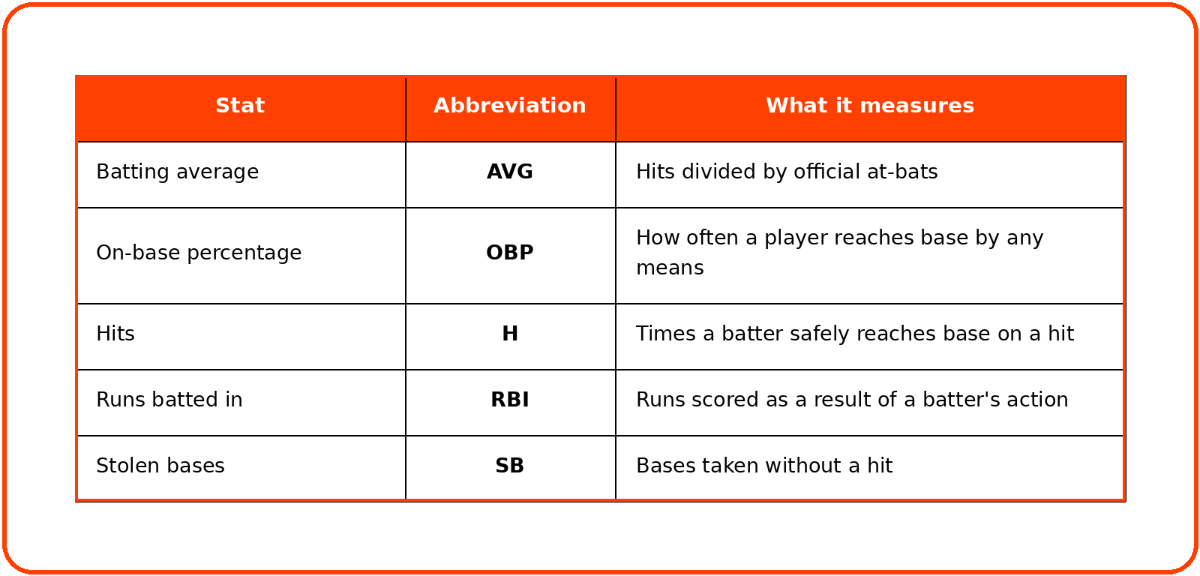
Pitching stats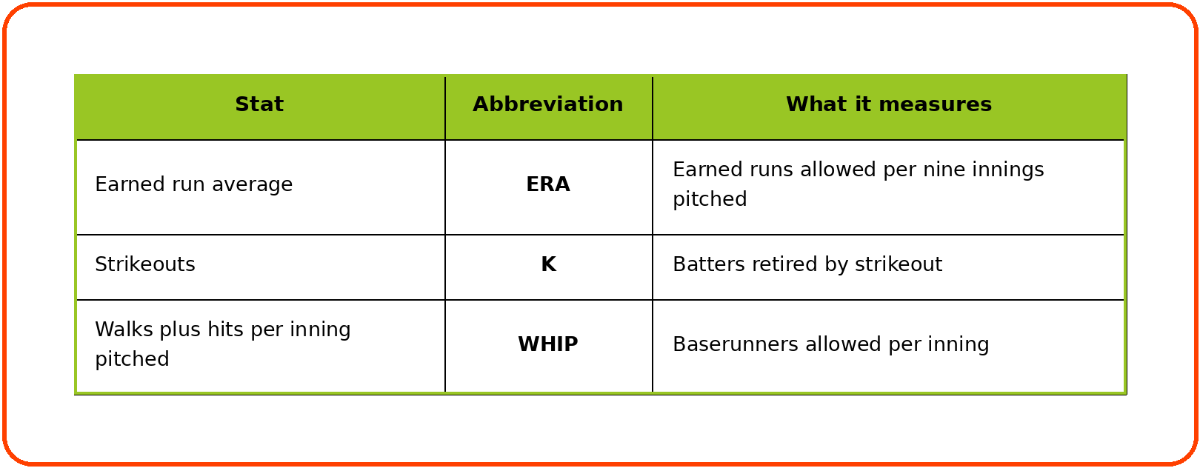
There are advanced, combined measures like WAR (Wins Above Replacement) that are prominent in professional and college coverage, but they are constructed from a lot of contextual data and aren't typically possible or needed to track at the juvenile level.
American Football
Offense and defense measure entirely distinct things, thus combining them (as many of the generic stat sheets do) makes the results tougher to read.
Offense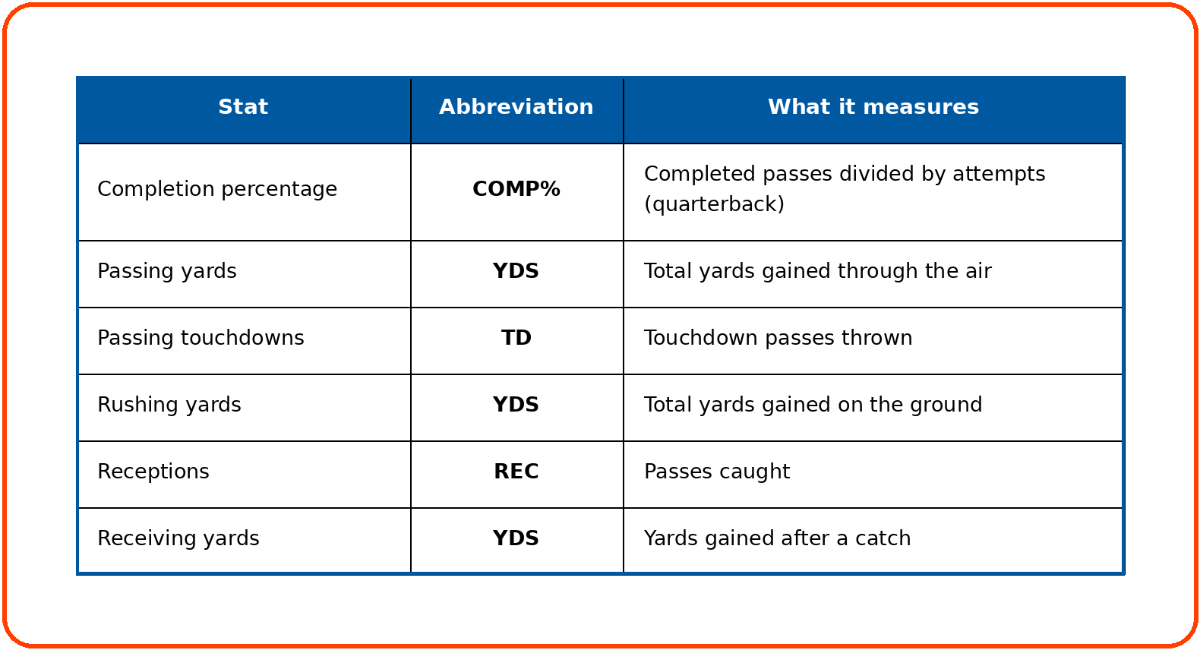
Defense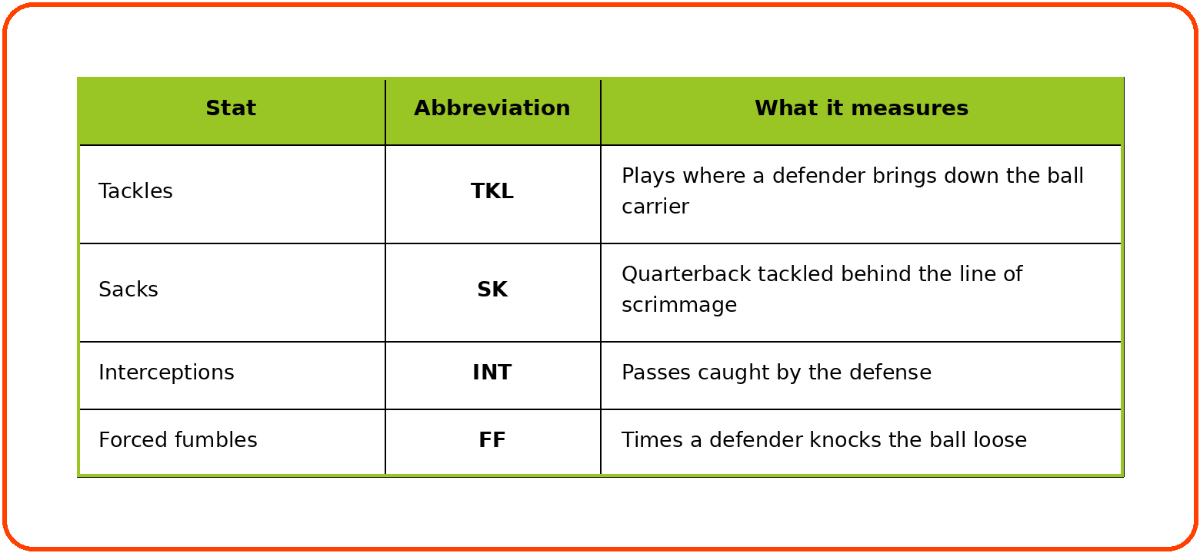
How Are Player Stats Actually Collected and Tracked?
Most businesses employ one of a couple ways, usually depending on size and level of competition.
Manual scorekeeping. Keep score by hand. During the game, a coach, parent volunteer or specialized scorekeeper records stats by hand (on paper or right into a phone or tablet). This is still widespread at the recreational and early youth level and it works, but it relies fully on someone constantly turning up and executing it effectively.
Spreadsheets. Excel sheets. Many clubs transition from paper to a shared spreadsheet, which is great for season-long totals, but usually requires hand entry after every game, and doesn’t integrate with scheduling, rosters, or communication.
Standalone stat-tracking apps. Separate stat tracking apps. There are apps providing live scoring and box scores for particular sports. These frequently work well at the single team, single sport level, but become harder to manage for a club or league running numerous teams across various sports, as each team can wind up on a separate tool.
Wearables and camera-based tracking. Wearables and camera-based tracking. GPS vests, sensors and video analysis offer data about physical load and position. These are useful, but usually only utilized at the higher levels of competition where the cost and setup are more justifiable.
Integrated club or league management platforms. All-in-one platforms for managing clubs or leagues. When a company has several teams and multiple sports, having the stats in the same system as the rosters, schedules and communication eliminates the need to reconcile data across distinct systems. This is where a platform like SportsPlus fit: metrics live alongside the rest of the season’s operational data, not in some separate app that nobody remembers to update.
Common Mistakes Clubs and Coaches Make With Player Stats
-
Reading raw count stats. No context. A player who has more assists may not be more successful if he played twice as many minutes as the player you are comparing him to.
-
Cross-level/age-group comparisons. The number looks identical, but a batting average from a 10U league and a 14U league are two different things.
-
Tracking more than the team will really use A rec-level team drowning in twenty tracked metrics per player usually ends up using none of them effectively. Begin with the handful that do have a bearing on practice planning or playing-time considerations.
-
Posting stats publicly or ranking them in a way that stresses kids. Posted as a scoreboard without context, stats can transform a development tool into a source of anxiety, particularly for younger athletes.
-
Never tying stats back to a discourse. A stat sheet that only gets looked at once a season is not doing its job. The significance is not just in storing it but in applying that in continuous coaching conversations.
A Framework for Choosing a Stat-Tracking Approach
Before picking a method, it helps to answer a few questions:
-
How many sports and teams does this need to cover? A single team can get by with a simple app or spreadsheet. A club or league running several sports across many teams usually benefits more from one connected system.
-
Who actually needs to see the stats? Coaches only, or also parents and players? This affects whether you need a tool with shareable views, not just an internal record.
-
Does this need to connect to scheduling and rosters you're already managing? If stats live in a separate tool from your schedule and roster data, someone is doing double entry.
-
Who will realistically be entering the data? A volunteer coach mid-game has different needs than a dedicated stat-keeper with a tablet on the sideline.
-
Does the level of detail match the level of play? A house league doesn't need GPS load tracking. A competitive travel or high school program might reasonably want more depth.
-
Is the cost and setup proportionate to your organization's size? A tool built for professional analytics is often overkill, and underused, for a youth club.
Where This Fits Into Club Management Software
If your group is already using a platform to help manage registration, scheduling, and communication, adding stat tracking to that same system removes one more separate tool from your season. Instead of a coach updating a spreadsheet, a parent checking a separate app, and an administrator maintaining rosters someplace else, the stats are right next to the schedule and roster they previously came from. That’s the functional reason why player metrics are increasingly showing up as a feature inside larger sports organization management tools like SportsPlus, and not being siloed in stat applications.
The bottom line
Player stats are no longer only a by-product of the scoreboard. They are a useful tool for development, evaluation and planning and the instruments to track them have become available much beyond the professional level. For most clubs and coaches, the bigger question is not whether to keep metrics, but how much and where that data should live. For one team, a simple app or spreadsheet might do the trick. If you’re a club or league that runs numerous sports and multiple teams, putting your stats in the same system as your rosters and scheduling usually saves time and leads to more consistent data from season to season.
If you run many teams or sports and want stat monitoring that lives with your rosters and schedule and not in another program, check out SportsPlus to see how it works for your season.
Frequently Asked Questions
Why are player stats important in youth sports?
They give coaches and players an objective way to track development and make decisions, beyond just wins and losses, and they support talent evaluation as athletes move into more competitive levels.
What stats should a beginner coach actually track?
Start small: for most sports, a handful of core stats (like points, assists, and shooting percentage in basketball, or goals, assists, and pass completion in soccer) covers most development conversations without creating unnecessary admin work.
Do youth sports need advanced stats like WAR or plus/minus?
Generally no. Advanced, derived stats are built for professional and college-level analysis and require a scale of data that most youth programs don't need or have the resources to maintain.
What stats do college recruiters look at?
This varies by sport, but recruiters generally want a consistent season-long record of core performance stats (batting average and ERA in baseball, completion percentage and passing yards in football, and so on), along with context like level of competition.
How do small clubs track stats without a dedicated analytics staff?
Most rely on a volunteer or coach entering data through a mobile app or club management platform during or after games, rather than a separate analytics operation.
Can tracking stats be bad for young athletes?
It can be, if stats are shared publicly as rankings without context, or if kids are compared to teammates without accounting for playing time or age group. Used as a private development tool, stats are generally a positive.
What's the difference between offensive and defensive football stats?
Offensive stats (passing yards, rushing yards, touchdowns) measure a team's own execution. Defensive stats (tackles, sacks, interceptions) measure how well a team stopped the opponent. They shouldn't be compared directly against each other.
Why do baseball stats separate hitting and pitching?
Hitting stats (batting average, RBI) and pitching stats (ERA, strikeouts) measure completely different roles on the field, so grouping them together in one list makes the numbers harder to interpret correctly.
How often should stats be reviewed with players?
There's no universal rule, but many coaches find a mid-season and end-of-season review works well for meaningful development conversations, rather than only reacting after individual games.
Is a spreadsheet good enough for tracking team stats?
For a single team, often yes. For a club or league running multiple teams and sports, a spreadsheet usually becomes hard to maintain and doesn't connect to scheduling or communication the way an integrated platform does.

Nathan Uppara
Digital Marketing Lead at SportsPlus
Nathan Uppara is the Digital Marketing Lead at SportsPlus, where he helps sports organizations discover better ways to manage registration, payments, scheduling, communication, websites, and mobile apps. He combines his experience in digital marketing and sports technology to create practical content and resources for clubs, leagues, and sports organizations.
Latest in Sports Admins

What Features Should a Youth Sports Club Website Have in 2026?
Oct 9, 202642
What Should a Modern Sports Organization Website Actually Do?
Oct 2, 202662
Why Generic Website Builders Dont Work for Sports Organizations
Sep 18, 202666
Smarter Sports Management with AI-Powered Features in SportsPlus
Jan 7, 2026184
Game Over on Booking Chaos-Sports Facility Software That Scores
Nov 19, 2025249
Popular in Sports Admins

Top 6 Golf Online Stores
Dec 14, 202310923
Top 5 Tennis Online Stores
Dec 14, 20239062
How American sports programs compare to European sports programs.
Jan 16, 20245852
The All-in-One Playbook for Stress-Free Sports Fundraising
Dec 13, 20232184
Top 10 Sports Website Builders Compared (Why Most Will Cost You Registrations)
Jun 18, 20241566